In Venice this spring, the historic interiors of Museo di Palazzo Grimani become the setting for a new body of work by Amoako Boafo, marking the artist’s first solo exhibition in Italy. Opening on 6 May 2026, It Doesn’t Have to Always Make Sense arrives just days before the Venice Biennale, situating Boafo within a dense network of global attention as the art world converges on the city.
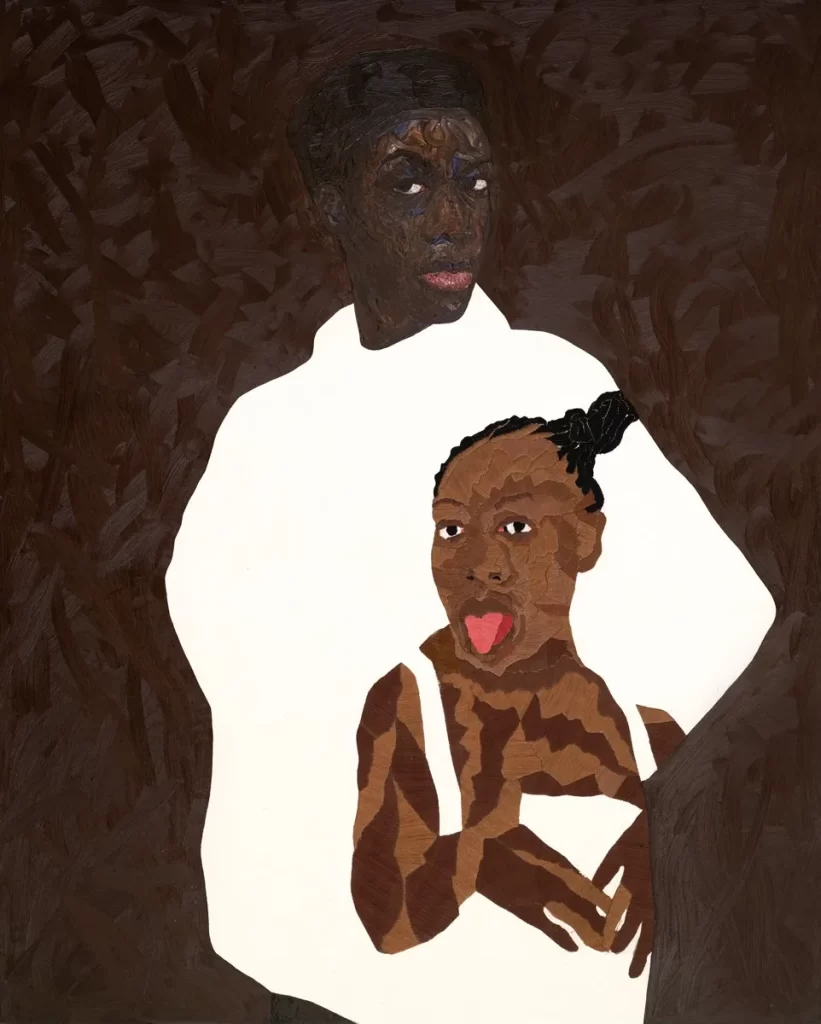
Born in Accra in 1984, Boafo has, over the past decade, established himself as one of the most closely watched painters of his generation. His portraits, rendered using a distinctive finger painting technique, foreground Black identity with a palpable sense of immediacy and control. The figures he depicts are neither passive nor idealised; instead, they project a self-possession shaped through gesture, styling and psychological nuance.
At Palazzo Grimani, these concerns are sharpened by the context in which they are presented. The sixteenth century palazzo, known for its rare Tuscan Roman Renaissance influences within Venice, carries with it a history of representation tied to power, lineage and display. Boafo’s intervention does not attempt to neutralise this legacy but engages it directly. His paintings are installed across the second floor in a manner that responds to the architecture’s scale and ornamentation, creating moments of friction as well as alignment between past and present.
This dialogue extends beyond the visual. By placing contemporary Black subjects within a setting historically associated with European artistic canons, the exhibition raises questions about absence and visibility. Boafo’s figures occupy the space with a quiet authority, unsettling inherited narratives without resorting to overt didacticism.
The exhibition’s title gestures towards an openness of interpretation, resisting the expectation that meaning must be fixed or resolved. Instead, viewers are invited into a more intuitive encounter, where atmosphere and spatial relationships shape understanding as much as the works themselves.
Running until 22 November 2026, It Doesn’t Have to Always Make Sense reflects a broader institutional shift, as artists from across the African continent increasingly engage with historically charged European sites on their own terms. In Venice, Boafo’s presentation signals not only a milestone in his career, but a continued reconfiguration of who is seen, and how, within the spaces that have long defined art history.