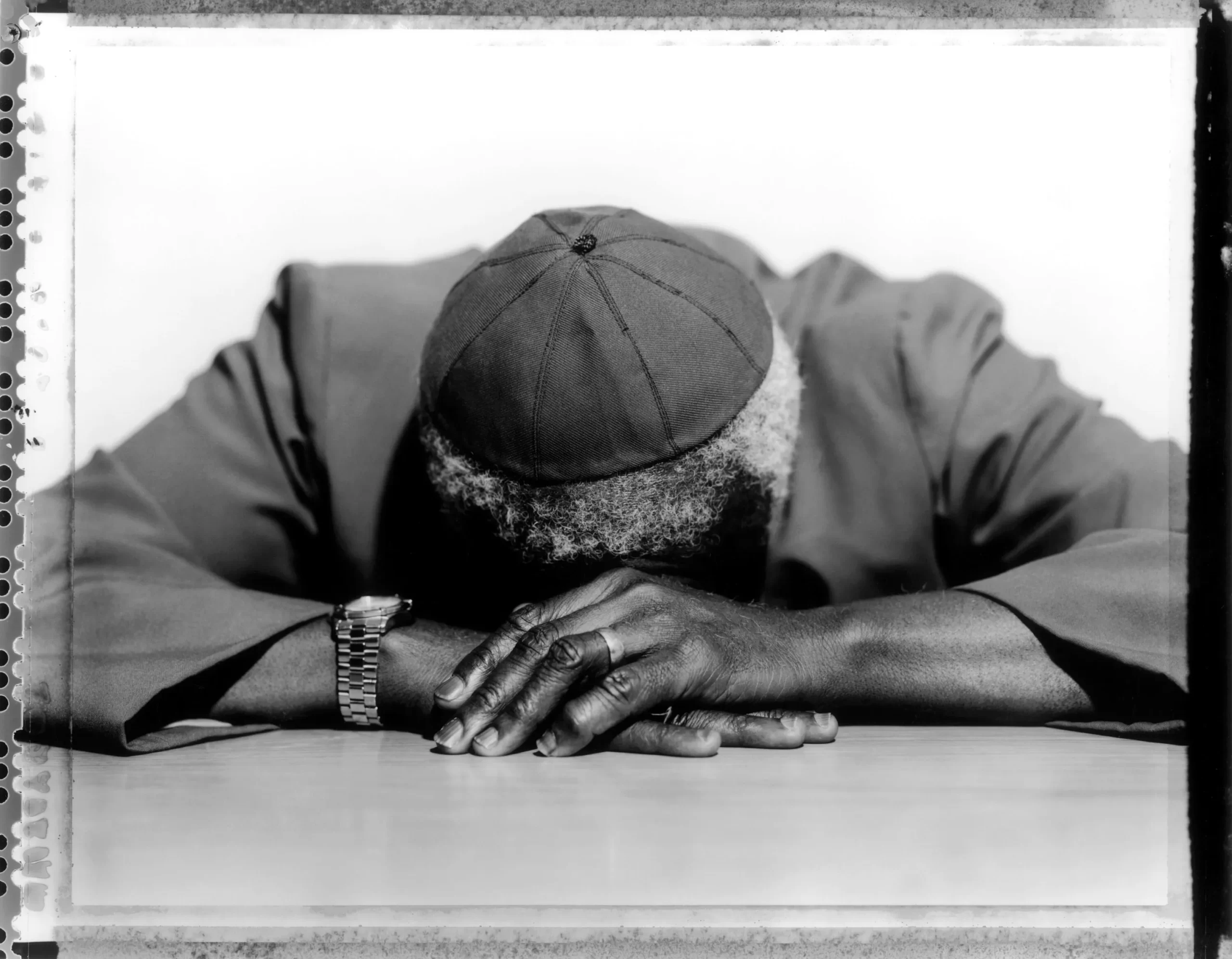
Galerie Voss is pleased to present the first solo exhibition of Nigerian artist Moses Zibor. His powerful portraits combine classical technique with a contemporary African perspective. This debut introduces a striking new voice to the gallery’s program. -The Sovereign Gaze – On the Art of Moses Zibor- There are painters who seek spectacle – and those who give space to silence. Moses Zibor belongs to the latter: a painter of rare seriousness, whose portraits do not clamor for attention but are suffused with an inner light – at once gentle and unyielding. Born in Nigeria, Zibor speaks the universal language of classical painting, yet his works are deeply rooted in the African present. His subjects – often Black men and women – do not pose. They stand, upright and unwavering, with a gaze that does not plead but knows. A gaze that evokes the psychological depth of Rembrandt, while fabric, skin, and bearing speak of an African dignity that requires no justification. Zibor is not a painter of effect, but of reclamation: he restores visibility to the unseen, grandeur to the everyday, and places the Black body not at the margins, but firmly at the center of the canvas – and of history. He does not paint to flatter, but to affirm. Every wrinkle, every reflection of light on skin, every silent detail becomes a quiet assertion of identity. His reverence for the old masters is palpable – the chiaroscuro of Caravaggio, the silent nobility of Velázquez – but Zibor does not imitate; he engages in dialogue. He weaves Western art history into the fabric of contemporary African experience, creating a painting that is both historical and immediate, poetic and political. In an art world often obsessed with provocation, Zibor chooses reverence. His critique of Western ideals is not loud, not didactic, but embodied – in the richness of Black skin, the unapologetic texture of natural hair, in garments that tell of heritage rather than fashion. Zibor does not simply paint Black subjects – he ennobles them. And in doing so, he invites us to see not with the eyes of habit, but with the gaze of history – and with the heart of humanity.
Source: Galerie Voss