Imbeleko, a formidable new solo of sculptural forms by Zizipho Poswa, opens at Southern Guild Cape Town on 12 February 2026 – ahead of the 13th edition of the Investec Cape Town Art Fair. Marking her fifth solo exhibition with gallery, the show reasserts Poswa’s stature as one of the continent’s most compelling voices working in clay.
On All That Motherhood Carries
Through a newly realised collection of earthenware sculptures, Zizipho Poswa offers a reflexive consideration of the power of motherhood as an inherited gift. And as is true to her articulation, the South African artist reflects on this through the lens of her isiXhosa ancestral lineage – a complex and embodied characteristic of her practice.
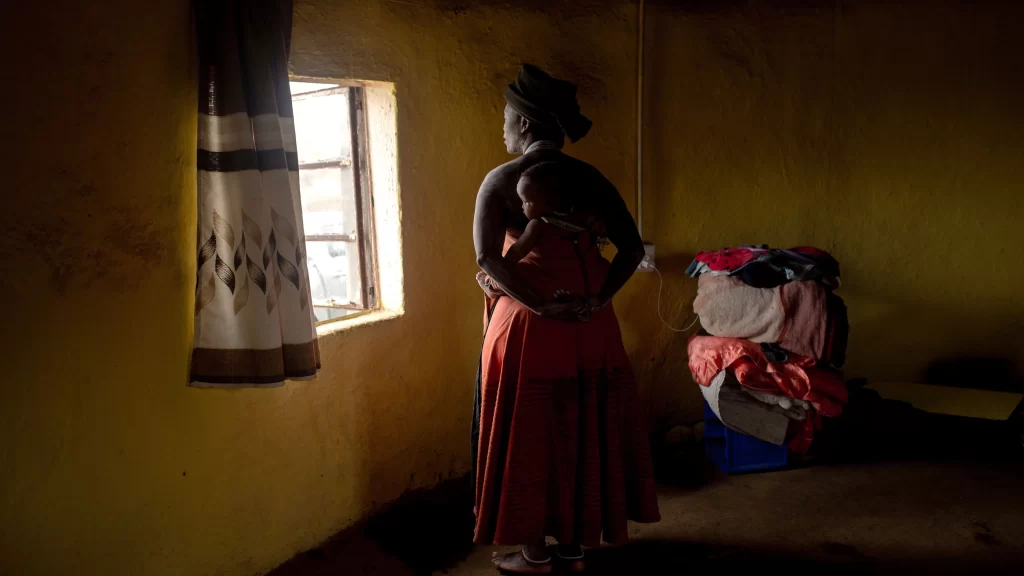
The title of this body of work, Imbeleko, refers to a long-standing isiXhosa ritual, commonly understood as a post-natal ceremony performed to introduce a child to their ancestors, symbolically tethering a new soul to those that came before it. More expansively, it also encompasses ‘ukubeleka’ – encompassing both the act of giving birth and the act of carrying a baby on one’s back. This carrying is traditionally done using a specially made blanket (also named ‘imbeleko’), tanned from the skin of the goat sacrificed during the ancestral ceremony, binding birth, care, and ritual into a continuous practice that traverses the pre- and post-natal threshold.
Led by family elders, the ceremony involves the burial of the umbilical cord and after-birth on ancestral ground, a gesture that connects the child to land, lineage, and spiritual protection. Poswa’s use of the term goes beyond metaphor. It affirms the transmutable power of matrilineal traditions as lived practice, passed through generations of women, and frames ‘imbeleko’ as a structure of co-creation in which motherhood is understood as both inheritance and responsibility.
With this new series, Poswa is informed by personal and collective narratives that reframe mothering as both a gift bestowed and a shared load to carry. As Poswa remarked during a visit to her bespoke Cape Town-based studio, Imiso: “We can’t have a new generation without women who carry, for those who came before and those who will come after.” Imbeleko is thus understood as part of a sustained ethos of homage that is central to her practice.
A clear art historical precedent can be traced between Poswa’s material choice and her thematic exploration of the knowledge transmitted through the matrilineal isiXhosa rite of passage that is ‘imbeleko’. In recent decades, several scholars have contributed to a canon of writing surveying major exhibition histories that explore the aesthetic specificity and iconographic indigeneity of African ceramic arts, much of it centred on women’s practices. What has emerged from such readings is a dominant academic archive that focuses, for the most part, on the question of the artistic value of the objects versus their symbolic, cultural, and utilitarian significance – particularly within domestic settings.
Often overlooked within larger modern and contemporary art histories, women ceramists of African descent have had their work framed by Western colonial intervention or subjected to scholarly encounters with the ethnographic and anthropological gaze. There is, however, a growing body of publications and exhibitions that seek to redress this by pursuing the work of Black women ceramicists through the lens of their subjectivity, interiority, and conceptual experimentation. Recent research and curatorial explorations by independent practitioner Dr. Jareh Das articulate the potentialities of this turn well. Notably, Poswa’s work is featured in Das’ forthcoming publication, Black Clay: Black Women, Ceramics & Contemporary Art (2027). In it, Das offers a comprehensive survey of the critical contributions made to ceramics by an intergeneration of Black women artists, examining the increasing prominence of the medium in contemporary art in recent years.
In this context, Poswa’s continued commitment to ceramics positions her practice within a broader lineage of contemporary artists whose work is informed by what Das describes as the “the direct and indirect matrilineal teachings which continue to be crucial to global pottery traditions.” Poswa’s work draws on this lineage to complicate entrenched assumptions about women’s labour, craft materials, and their place within material culture.
For Poswa, the ancestral foundations of her work remain foregrounded and sanctified in Imbeleko. She reflects intimately on her own maternal experience as embodied, challenging, and spiritually transformative. In terms of form, what these new works visualise is the insistence of a social contract among amaXhosa; that the journey of motherhood is not a solitary load to bear. It is a generative labour that unfolds through shared responsibility and inherited knowledge. Each carefully articulated artwork transcends an objective and individual aesthetic, like unique family heirlooms handed down through generations or vessels of collective memory.
Homage and sanctity are continuing threads from earlier bodies of work. Specifically, the series of large-scale bronze sculptures, iiNtsika zeSizwe (Pillars of the Nation), which marked Poswa’s 2023 debut solo presentation in the United States. The works thematically explored the cultural meaning of ‘umthwalo’: the traditional, physical, and symbolic load of daily life carried by amaXhosa women in the rural Eastern Cape. We see this, for instance, in the image of a woman with a bundle of firewood secured upon the crown of her head; a visual reference translated into the voluminous clay base structures that seem to cradle or support other forms. Understood as an inherited responsibility, a load that one learns to carry from a young age, ‘umthwalo’ is upheld as a feminine rite-of-passage, one that is just as essential to the sustenance of life as it is to the integrity of the collective. In Imbeleko, however, the load is resituated and bound to the body – the front of the base rather than atop it – marking a subtle shift in meaning-making.
While Poswa’s mastery of material, instinctual use of colour, and sustained ethos of homage remain ever-present, Imbeleko marks a decisive inflection point in her practice. Where earlier bodies of work engaged outward expressions of Xhosa heritage and shared ceremonial life, this series shifts its attention to the maternal journey as an embodied, interior process. The emphasis moves from the visible performance of carrying to the intimate conditions that make it possible.
This turn does not relinquish the communal; rather, it deepens it. Motherhood is articulated not as an isolated experience, but as shared custodianship – a generative responsibility shaped through lineage, inherited practice, and lived, bodily knowledge. The works give form to what is often carried without recognition: the physical, spiritual, and ancestral labour that sustains life across generations.
Seen within the broader arc of her practice, Imbeleko signals a maturation of Poswa’s sculptural language – one that binds form, lineage, and interiority with renewed clarity. Motherhood emerges here as a continuous act of making and becoming, grounded in matrilineal inheritance and communal care. In rendering this knowledge monumental, Poswa affirms the sanctity of carrying as both offering and inheritance, held in communion with those who came before and those still to come.
Source: Southern Guild