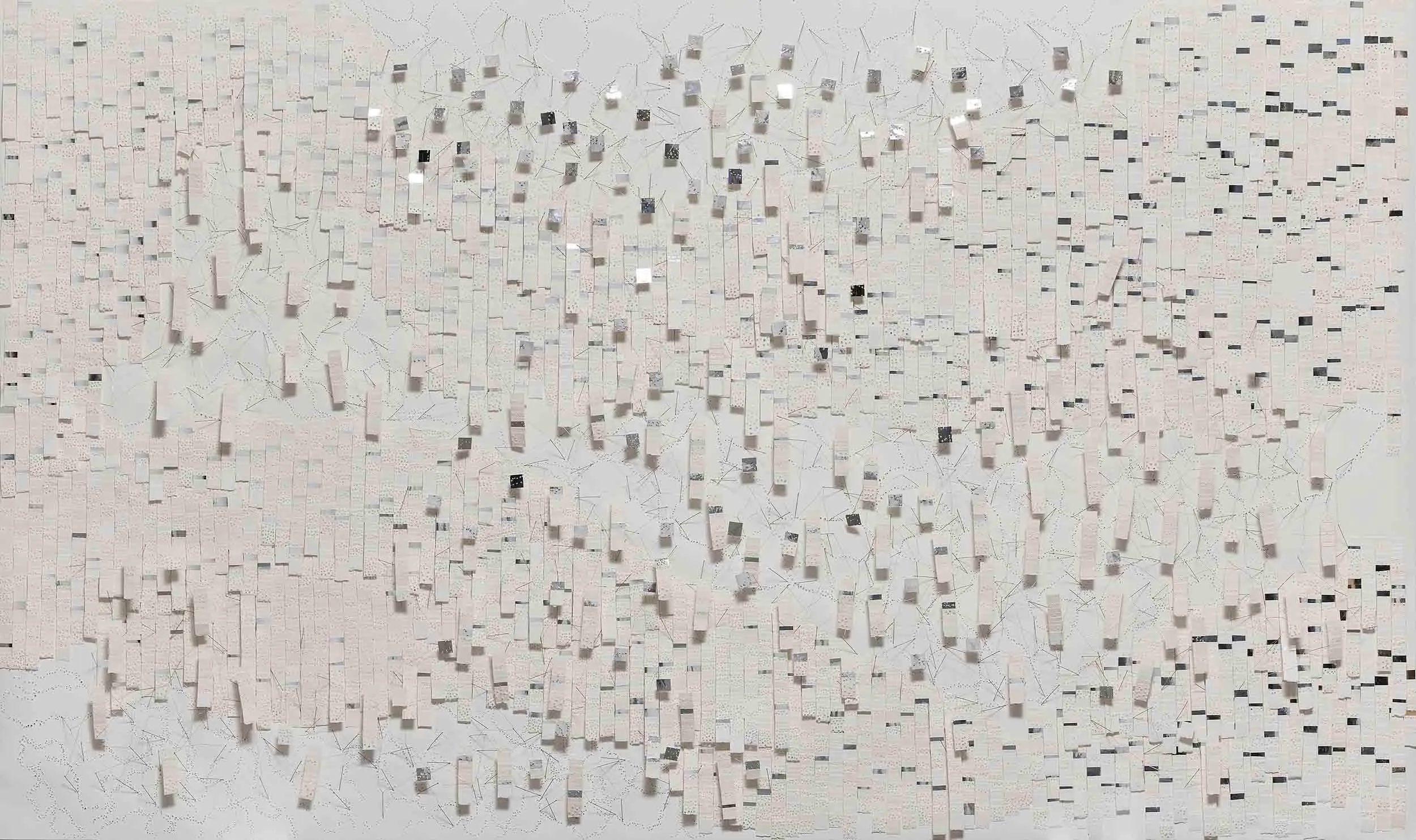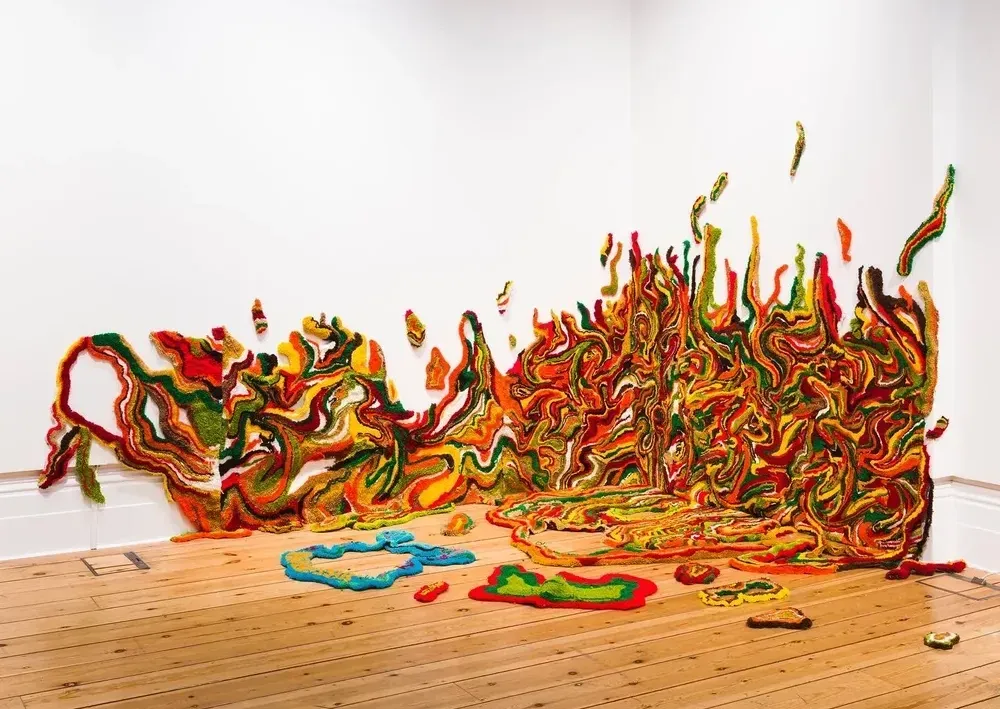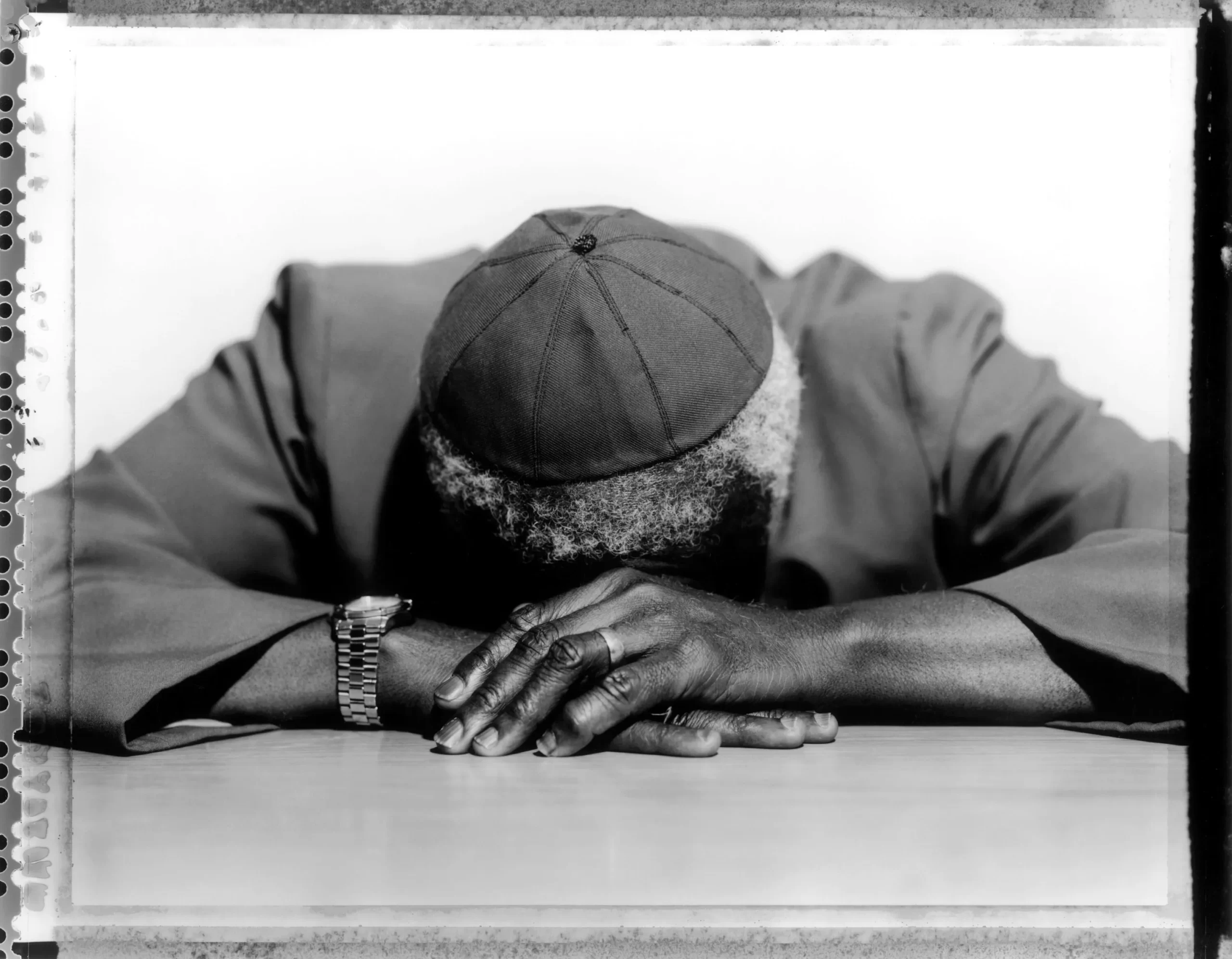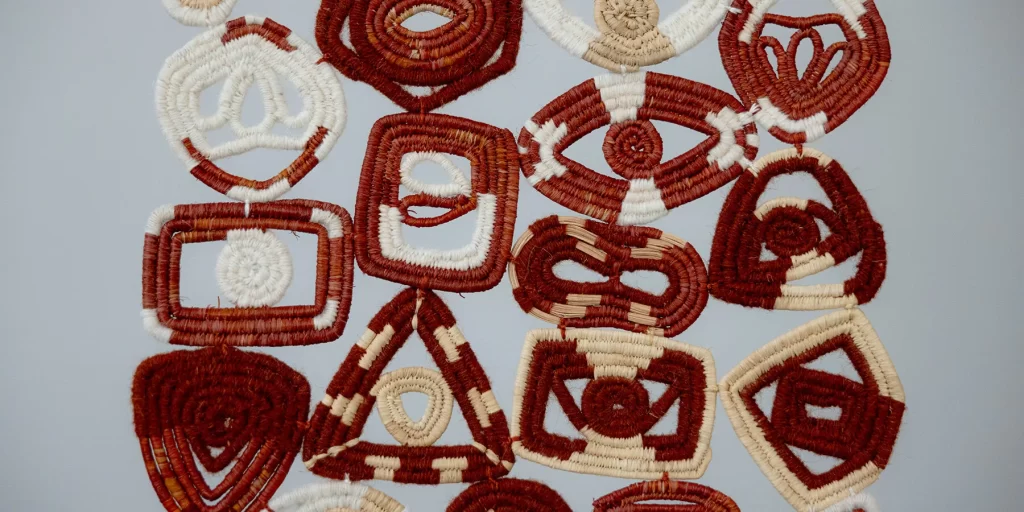
For its first national pavilion at the Arsenale, the Kingdom of Morocco presents Asǝṭṭa at the International Art Exhibition of La Biennale di Venezia, a monumental installation designed specifically for the Artiglierie by multidisciplinary artist Amina Agueznay. The project explores the transmission of traditional craftsmanship and shared memory through a ‘fully immersive installation that unfolds as a membrane, or second skin,’ as Amina Agueznay tells designboom. Berrada describes the pavilion as ‘a porous, liminal space that enables the circulation of ancestral narratives while posing a broader question: how might we compose together across a plurality of languages and techniques?’ In dialogue with the Biennale’s theme, In Minor Keys, curated by Koyo Kouoh, the project foregrounds what she calls ‘discreet, humble, yet rich and structuring practices’ that shape collective life beyond dominant narratives.
ASƎṬṬA BY ARTIST AMINA AGUEZNAY AND CURATOR MERIEM BERRADA
Asǝṭṭa follows a sequence of spatial passages rooted in the notion of the âatba, the threshold as both an architectural and symbolic entity. ‘Threshold, or âatba, is the in-between. More than a cosmological concept, the threshold is how people organize their lives and sustain their practices,’ Moroccan visual artist Amina Agueznay explains to designboom. Trained as an architect in the United States before returning to Morocco to research vernacular practices, Agueznay has long worked at the intersection of spatial thinking and material knowledge, often developing projects through sustained collaborations with artisans.
Within Moroccan contexts, this space mediates between interior and exterior, sacred and profane, private and public. Berrada expands on this spatial condition, noting that ‘it is far more than just a doorway: it is a distinct environment, an area of transition rather than division, an independent architectural and symbolic entity, animated by ancestral rites.’ Inside the Arsenale’s Artiglierie, this idea becomes tangible. The installation operates as what she describes as a ‘transformative threshold (âatba),’ where visitors move through a landscape of transitions rather than fixed zones.
This in-between space also carries a temporal and perceptual dimension. ‘This “in-between” space allows for moments of breath and perspective,’ Berrada continues, drawing parallels to ‘the rhythmic suspensions found in Arabic poetry or the silences that reveal the depth of music.’
WEAVING CRAFTSMANSHIP AS KNOWLEDGE, NOT PRESERVATION
Through this presentation, Asǝṭṭa aims to reframe craftsmanship, not only as heritage to be preserved, but as a form of knowledge production. ‘Knowledge production transcends preservation to become innovation,’ Agueznay shares with us. ‘Innovation involves a deep understanding of matter, the experience of matter and gesture.’
Berrada situates this within a broader cultural context. ‘Craftsmanship is, intrinsically, a living matter… yet this “intelligence of the hands” is not always recognized,’ she explains, pointing to persistent hierarchies between art and craft. For the pavilion, this becomes a critical point of departure. ‘When the theme ”In Minor Keys” was announced, we understood it was a perfect opportunity to bring these discreet, humble, yet rich practices to the forefront,’ she says.
The project brings together 166 Moroccan artisans alongside two Venetian collaborators, each contributing as a creator rather than executor. ‘Each artisan has chosen to give a new, deconstructed impetus to their work,’ Berrada notes, emphasizing that the contemporary dimension of Asǝṭṭa emerges from within the practices themselves. This approach reflects Berrada’s ongoing curatorial interest in how art and craftsmanship intersect as forms of contemporary storytelling across African contexts.
Source: Designboom